Home
The essence of home is an environment where relationships flourish and memories are made



Mothers’ Day brings with it memories of home. Home is more than a physical location. Special guest, Bob Ingram, and I reveal the emotional resonance we’ve created in our respective places. You’re in for a treat. And please remember:
Home as Haven
A space of emotional resonance where a sense of comfort, safety, pleasure and conviviality radiate
by Susan Schaefer
Come along as I bring you on an intimate journey from my childhood home up to the present.
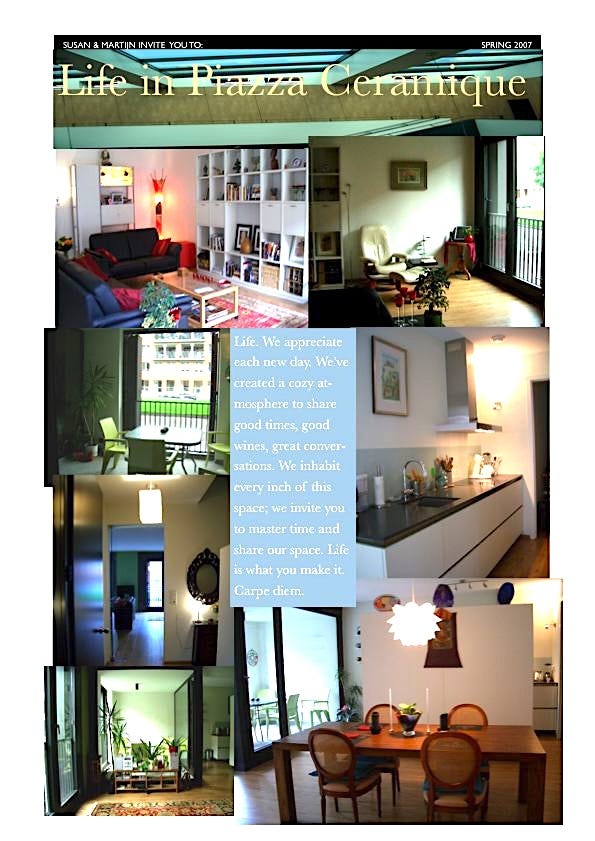
We appointed this home knowing that it would be haven and hospice
Gezelligheid
Guests often note that my home feels like a retreat – not merely defined by a physical location or an architectural structure, but the feelings and connections cultivated within. In each place I’ve called home, and there have been many, I’ve created a space of emotional resonance where a sense of comfort, safety, pleasure and conviviality radiate.
My knack for crafting such spaces comes from my childhood. My parents’ home was not elegant but always well-organized and welcoming. While only a modest Philadelphia row home, without features that many covet today, it was my family’s hospitality that was the draw. Later in life, my homes offered many other amenities, but a home, like a recipe, is the sum of its parts. It takes an openhearted nature, the desire to share, and a bit of magic to blend all the elements together. The essence of home is an environment where relationships flourish and memories are made.
My guiding principle is best described by the Dutch concept of gezellig – derived from the noun gezelligheid. During the Covid epidemic, which enforced at home time, the Danish term hygge was popularized. But home is more than a cozy setting. Gezellig connotes a positive atmosphere, flow or vibe that favorably colors the personal experience of inhabiting and visiting the space.
A natural nester
In 1937, J. R. R. Tolkien published a fantasy novel that most of us know as The Hobbit – one of the best-selling books of all time with a wildly successful movie franchise. Our beloved hero, Bilbo Baggins, the home-loving main character, is wooed away from his comfortable hobbit hole in the rolling green landscape of The Shire on a long adventure by the wizard Gandalf and his 13 dwarf companions. Yet, Bilbo always yearned to be home again.
I grew up in Northwest Philadelphia, the green heart of the city surrounded by Wissahickon Valley Park, a national natural landmark. Best known as Wissahickon Woods, this highly regarded urban forest features an astounding 2,000-acre gorge and 57 miles of trails and abundant mature hardwood trees.
I’ve always fancied the historic Germantown neighborhood, nestled right in the Wissahickon Woods, as my Shire. It’s green hills and valleys offer a constant source of natural replenishment smack dab in Philly’s urban sprawl. Despite my outgoing nature, I am a homebody who needs to be nourished by my surroundings and in my youth, I was content to plant my stake in this green corner of the metropolis. But like Tolkien’s hobbit hero, the call of an adventure swept me to the far corners of the globe. No matter where I rested my head, be it a tent or log cabin, a cottage or converted warehouse, I always made a home, yet, longed for my Shire.
Homes away from home
At the tender age of 22, my Gandalf appeared in the form of a Hindi spiritual master – Guru Maharaj Ji, one of the many eastern sages who rose to fame and fortune during the flower-powered 70s. Guru Ji’s dwarves were a company of mahatmas – his devotees. Bilbo was led to The Lonely Mountain in Middle Earth; I was whisked to a tent encampment outside the guru’s stately Divine Light Mission, situated under the shadow of the vast Himalayas in Old Delhi, India.
After earning a reputation as a responsible member of his inner circle, Guru Ji sent me on a mission to South America to buy a building with provided funds, establish an outpost ashram with a welcoming vibe, and recruit followers known as premies. Amazingly, as an inexperienced youth entrusted with this huge responsibility, I successfully completed my undertaking, purchasing an adobe building in the village of Usaquén, about 10 miles from Bogotá, creating a ready-made household for the mahatma designated to assume leadership.
During this period, I had grown very close with Dario and Angela Lozano, the young couple living next door. Together, we became increasingly dissatisfied with the ashram. Around the same time, they completed their new house. When they asked me to move in with them, I eagerly accepted.
Dario, a professional engineer, had been busy building a rustic, thatched-roof log cabin high above Bogotá, in La Calera, a vicinity in the foothills of Andes Mountains. Sans heat, indoor plumbing or electricity, I accepted a small nook built into the wall as my sleeping place. My rent was instructing the family in English and helping out with chores and the children.
Each morning began with a bracing outdoor shower in an enclosure Dario had constructed, water slightly heated by a sun-warmed plastic sack with an attached hose. Three days a week, Dario and I navigated the harrowing, hairpin-turn road down the sheer mountain slopes to the city center, where he worked for a government agency, and I taught English at the respected Centro Colombo Americano where I had landed a part-time position.
On my free days, I assisted Angela at her loom as she wove native ruanas, the Colombian version of a serape, that she sold from the house. I had donated funds to purchase a large milk cow that they affectionately named Susana, after me, and learned to milk, churn butter, and strain curds for yogurt and cheese. After a time, I began a bedtime ritual, inventing little stories in Spanish for the children, Ariana and Mauricio, by the glow of candlelight. Life in the Lozano family’s enchanted mountainside cabin defined home as a haven.
Upon my return from South America, I reestablished my graduate studies at Temple University, working towards a doctorate. Now highly proficient in Spanish, I was recruited as a Director of the Bilingual English Program at Camdem County College, a full-time appointment that provided the means to buy my first home – a three-bedroom, semi-detached brick house on Haines Street in my favored Germantown neighborhood, where I lived for over ten years. Our block enjoyed tight community spirit and perpetual camaraderie, and my home was a hub, constantly abuzz with visitors and activities.
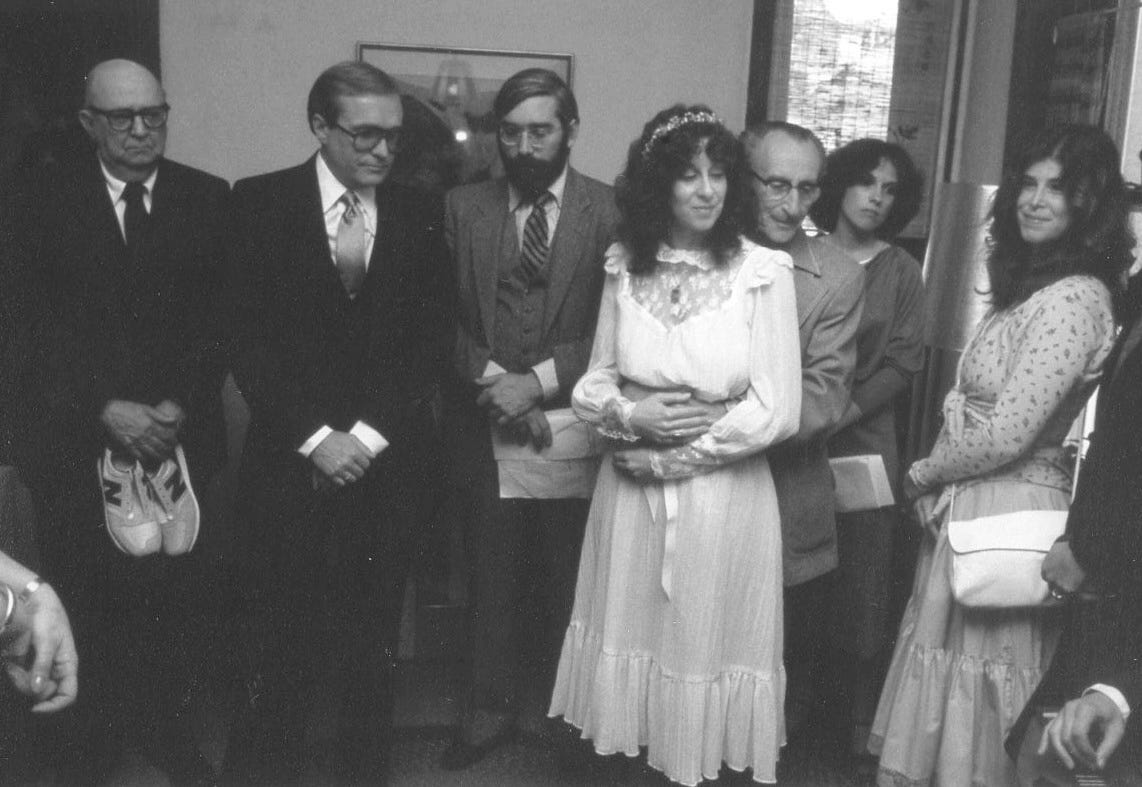
Eventually, I invited my boyfriend Bob to live with me, then marrying him there, surrounded by family, friends, colleagues and neighbors, consecrating the space.
As my income increased, so did my expectations. I undertook a total restoration of the house, transforming the interior into a sparkling jewel box with an open floor plan, renovated hardwood tiger oak floors, and stained-glass windows from a demolished church that opened like French doors over the sink, revealing our new deck and refurbished garden. Again, our home abounded with guests and geniality.
Later, after establishing yet another home in Philadelphia’s suburbs, personal and professional winds blew me across the country where I purchased a rustic cottage on the shores of Lake Minnetonka, historically a sacred hunting and fishing ground for the Mdewakanton Dakota and Ojibwe nations in Minnesota, far outside Minneapolis.
I eventually transformed the neglected cottage into a sparkling chalet that became a desired weekend destination for many city friends. Sommerville Road in Cottagewood was on a cul-de-sac, situated in a wooded setting, one block from the lake. The vaulted ceiling soared, creating a sense of spaciousness despite the house’s modest footprint. I added a sunken den with tiled fireplace, a large, screened wrap-around sleeping porch, a roomy skylit master bath with two-person whirlpool, and a four-person sauna in our basement gym area. With the large wood-burning living room fireplace, this home was a Bona fide four-season refuge.
During ten years of lakeside living, I met and married my beloved late husband, Martijn, who immigrated from his native Netherlands and took to this wild environment like a fish to water. Life with our three cats, Yin, Yang and Snoepje, in this bucolic home was blissful.
I came to realize that Martijn was my home. We didn’t know where one of us began and the other ended. Our relationship and life in Cottagewood comprise the most harmonious time of my life. Unfortunately, our 30-mile commute became a burden, necessitating a move to the city.
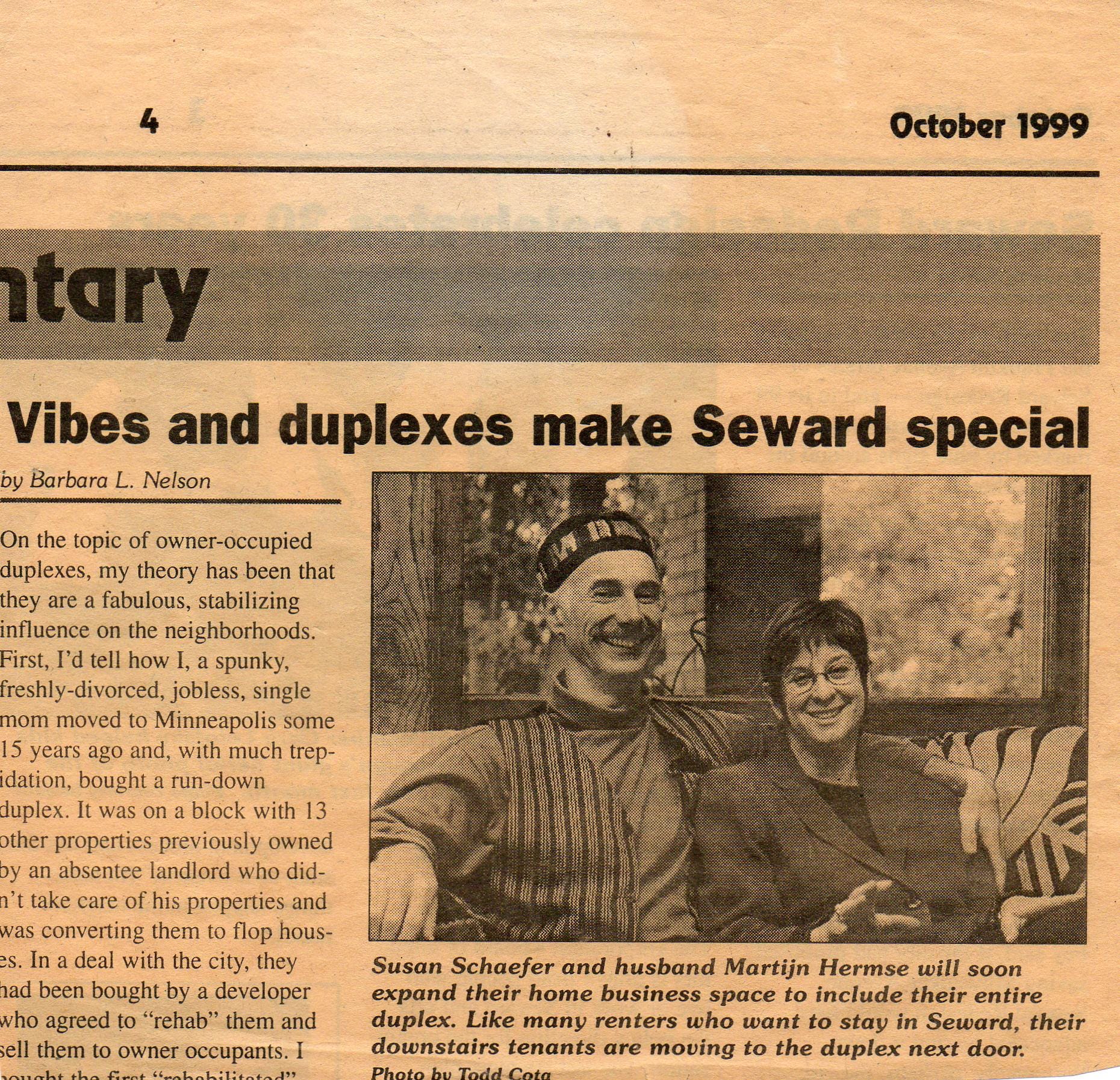
In Minneapolis’ Seward neighborhood, we found a stately brick three-story, 5,000 square-foot, duplex complete with tenants renting the lower unit, allowing us to live practically mortgage-free! Our 27th Avenue arts and craft-designed home was elegant, with solid oak flooring and built-ins throughout, stylish balconies and a vaulted third floor, three-bedroom one-bath complex with a private back entrance where we housed Martijn’s shiatsu practice.
The expansive main floor had a music nook, huge living and dining area with and a massive chef’s kitchen with pantry and cooking island. We hired a young landscaper to design a Japanese-inspired backyard complete with a waterfall koi pond. The Seward home became our expansive urban retreat – scene of legendary weekly and holiday gatherings of dozens of friends from the Twin Cities’ celebrated “creative class” – artists, musicians, actors, and writers. With ample space we hosted countless guests from Europe and across the country. Ultimately, we took over the lower floor apartment to house my growing public relations practice. For a while, Martijn and I discovered the joys of working from a spacious, nurturing home.
After five grand years in Seward, I was itching for a career change. Running a small, woman-owned public relations firm, paying the salaries, retirement funds, and educational and parental leave of my employees was stressful. The public relations field itself was not heading in direction I had been lobbying for – to make it a licensed profession. Being married to a European had also opened my eyes to the excitement of the founding of a new form of democracy – the birth of the European Union.
Maastricht University, located in Martijn’s hometown, offered a post-graduate degree in European Public Affairs. Martijn and I shared many conversations about leaving the United States, a country he’d come to love and respect. There was also the heartbreak of parting with this beloved home and our cat family, but in the end, we found homes for our four-footed friends and sold our colossal duplex, moving across the “big pond” into his family home. His mother Gerri had always rented an entire floor of her large three-story home to students, so we inherited that space with its private kitchen, living room, bedroom and newly constructed bathroom.
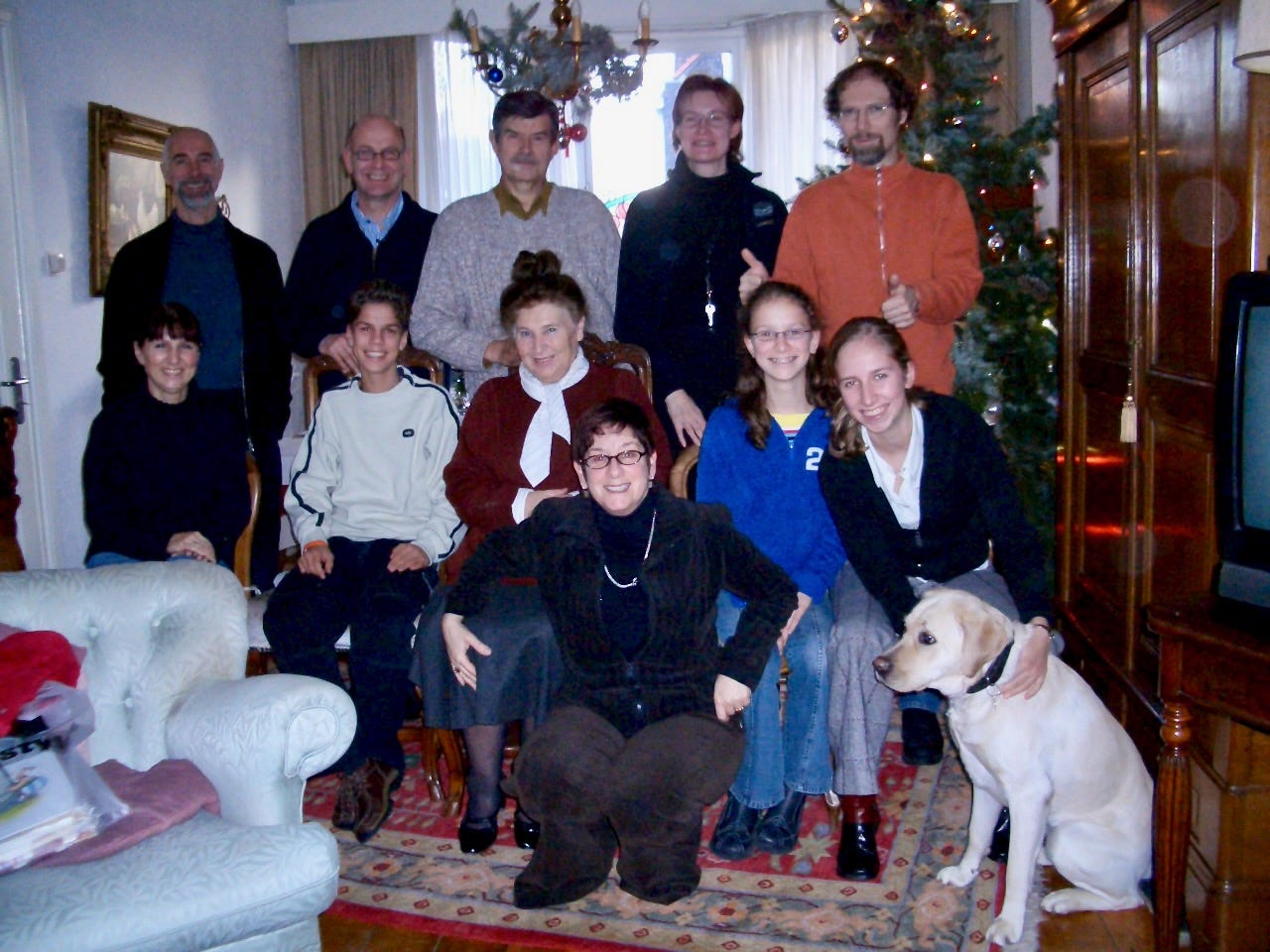
The Family. Gerri’s house exuded gezelligheid. I learned much about entertaining from my gregarious, big-hearted mother-in-law. Photo| 2004
After graduating with my “drs.” and greatly enjoying European ambiance, I relished the chance to teach at Maastricht University and consult for the city and a few NGOs. Martijn was also regrowing his affection for his home country. Still intending to move back to the U.S. in a few years, we rented a small apartment in Wyck, Maastricht’s ancient walled city. But when Martijn’s name was selected from a lottery for an exclusive, modern, light-filled, architect-designed two-story townhouse built inside Céramique, the historic former ceramics factory, one block from the banks of the Meuse River, we made the leap. We also began contemplating my becoming a Dutch citizen, as we believed we had found our forever home. But destiny dealt us a fatal blow.
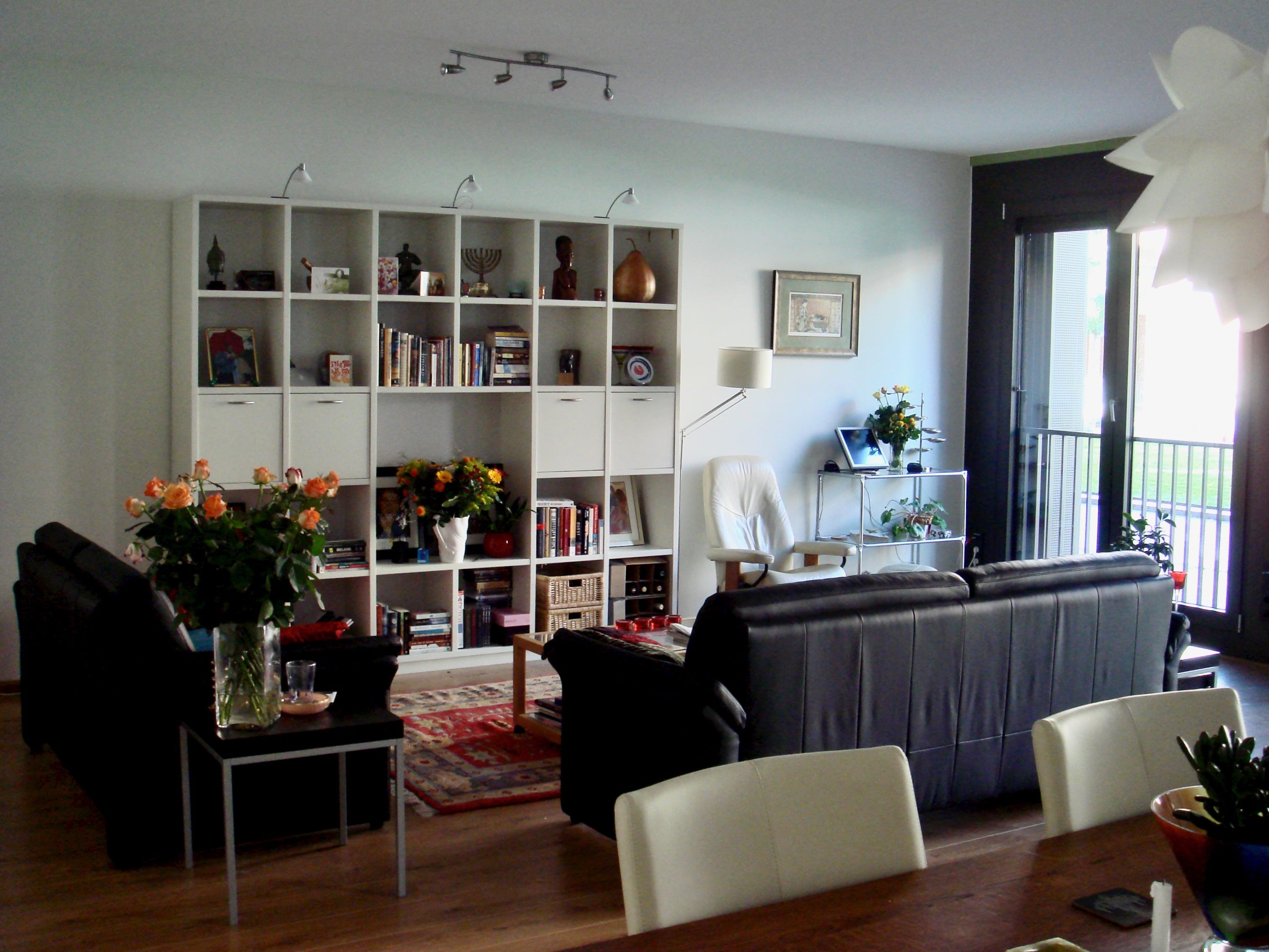
Almost immediately upon moving into Céramique, Martijn discovered the tumor that eventually ended his life. We appointed this home knowing that it would be haven and hospice, sparing no expense with the furnishings and fittings.
We spent the next 18 months surrounded with all the trappings needed to assure Martijn’s comfortable and safe final journey. Its dramatic floor-to-fifteen-foot ceiling windowed doors and balconies flooded the space with natural light. The open floor plan with three-bedrooms and two-and-a-half baths offered ample space for overseas guests … and home nursing care. It was our bittersweet home, where we hosted countless gatherings of comfort … and farewells. Then, this noble residence that had supported the end of Martijn’s life in grace and ease, and had witnessed extraordinary loss and sadness, served as a genuine sanctuary, enveloping me in my grief for another six years.
Slowly, as I shed my widow’s weeds, I sought regeneration and light. Still adrift in traumatic grief, I searched far and wide for succor, finally choosing the familiarity of a marina community on Florida’s fabled Intercoastal Waterway where Martijn and I had spent two glorious weeks every year of our marriage.

Sun Harbor dock
Wooed by charming backyard palm trees that danced a rhumba in the tropical breeze, a heated community swimming pool, and the beach a mere ten-minute walk from my front door, I purchased the Sun Harbor townhouse at a great bargain due to the recent economic crash. Under cerulean skies and a blazing sun, I began walking along the ocean for miles every day, trying to shake the shadows that plagued me.
Renovating my Sun Harbor home was a form of grief therapy. Gutting it to the studs, I subconsciously tried to demolish my walls of despair. The result was a gem with every comfort and amenity. With great intent, I selected environmentally sound infrastructure: I installed a state-of-the-art, on-demand hot water system, energy efficient air conditioning, ceiling fans, kitchen appliances, sun-reducing shutters and a retractable back yard awning that kept the house cooler in the tropical heat. Natural stone and teak floor materials were water and heat resistant. This was to be my healing haven.
But my spiritual and psychological renewal required more than sunshine and physical comforts. In hindsight, I realize that I was trying to recreate the exuberance and elation Martijn and I had felt during our perfect, brief, fortnight stays in this spot in the sun. Within 18 months, the same time it had taken from Martijn’s diagnosis to death, I placed my seaside house on the market. There would never be a haven in this harbor.
I returned to Minnesota where Martijn and I had created a home within the boundaries of our own relationship and where we had been embedded in deep community and fellowship. Providence, and a wonderful young realtor, led me to an eagle’s aerie, twenty-four stories above the riparian wetlands of the Mighty Mississippi. It was in this literal roost, with an expansive east and south facing vista, that I returned to self.

Everything about my Riverview Tower nest clicked. Longtime friends wholeheartedly celebrated the memory of Martijn, allowing me to bask in happy remembrance of the life we’d lived. Such acceptance was both balm and tonic; I bathed and drank in a reservoir of reminiscence. My home once again was a gathering place of bliss and creativity. For ten glorious years, circles of healing surrounded me, until finally, I was fully sated. By the time the Covid pandemic enforced its lonely isolation, I had experienced a spiritual awakening. As the quarantine lifted, my woodland roots beckoned.
Home again
I am basking in the life affirming green outside my window. Though devoid of the dramatic view from my eagle’s perch overlooking the Mississippi, I’m grounded here at twenty feet above the little Wissahickon Creek, nestled in scruffy urban woods. At eye-level, I daily behold a riot of birds, a herd of deer, a scurry of squirrels, a lone fox.
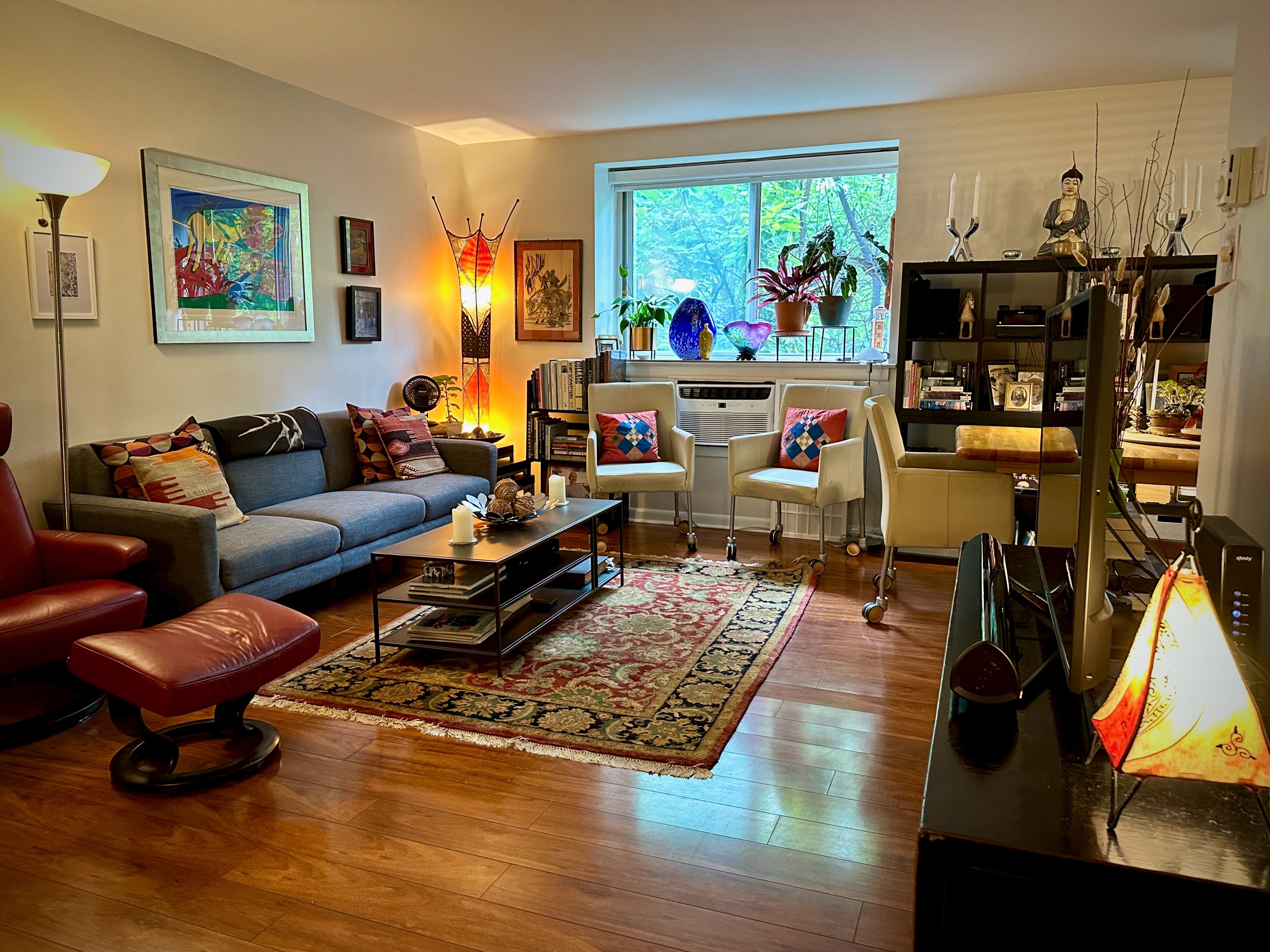
One-story above ground, my two-bedroom home in Valley Greene Co-op is complete. The woodland southwest view glows in golden sunlight in the winter with appreciated deep-leafed shade throughout spring, summer and autumn. Original in-ceiling radiant heating keeps me toasty. My snug kitchen has the indulgence of a compact washer/dryer which I complemented with a modern, European fridge, stovetop, and oven/microwave/air fryer combo. The previous owner left me a mini-spa – an extra-large bathroom with a two-person whirlpool that provides a little luxury.
As an authentic cooperative, Valley Greene offers a built-in community of camaraderie, cooperation and activities. With nearby public transportation and shopping, my new location sits at the nexus of the East Falls, Germantown, Mt. Airy, Chestnut Hill, Manayunk and Roxborough neighborhoods, and at the mouth of my beloved Wissahickon Woods.
Upon his triumphant return home, Bilbo pens his own version of his adventures called, There and Back Again, which decodes to “home-away-home,” the structure typical of a Bildungsroman, a class of novel that depicts and explores the psychological and spiritual development of a protagonist, typically on a journey.
A wry smile cracks my face as I sit back in The Shire of my youth, now “penning” the stories of my own journeys. Yes, the analogy holds. I’ve been there and back again.
Be It Ever So Humble
by Bob Ingram
My grandfather served before the mast in the British navy. He later built a cottage in Seaside Heights, NJ, so he could again be by the sea.
The old cop had emphysema so severe he could barely put the key in the trailer door. He showed me around inside and I gave him a check for $1,500. I had always wanted to live by the sea. Now I would be seven minutes from the ocean across the wetlands in North Wildwood, NJ. I have lived in this 1956 Marlette for the past 24 years, 20 of them with my late calico cat, Ingrid.
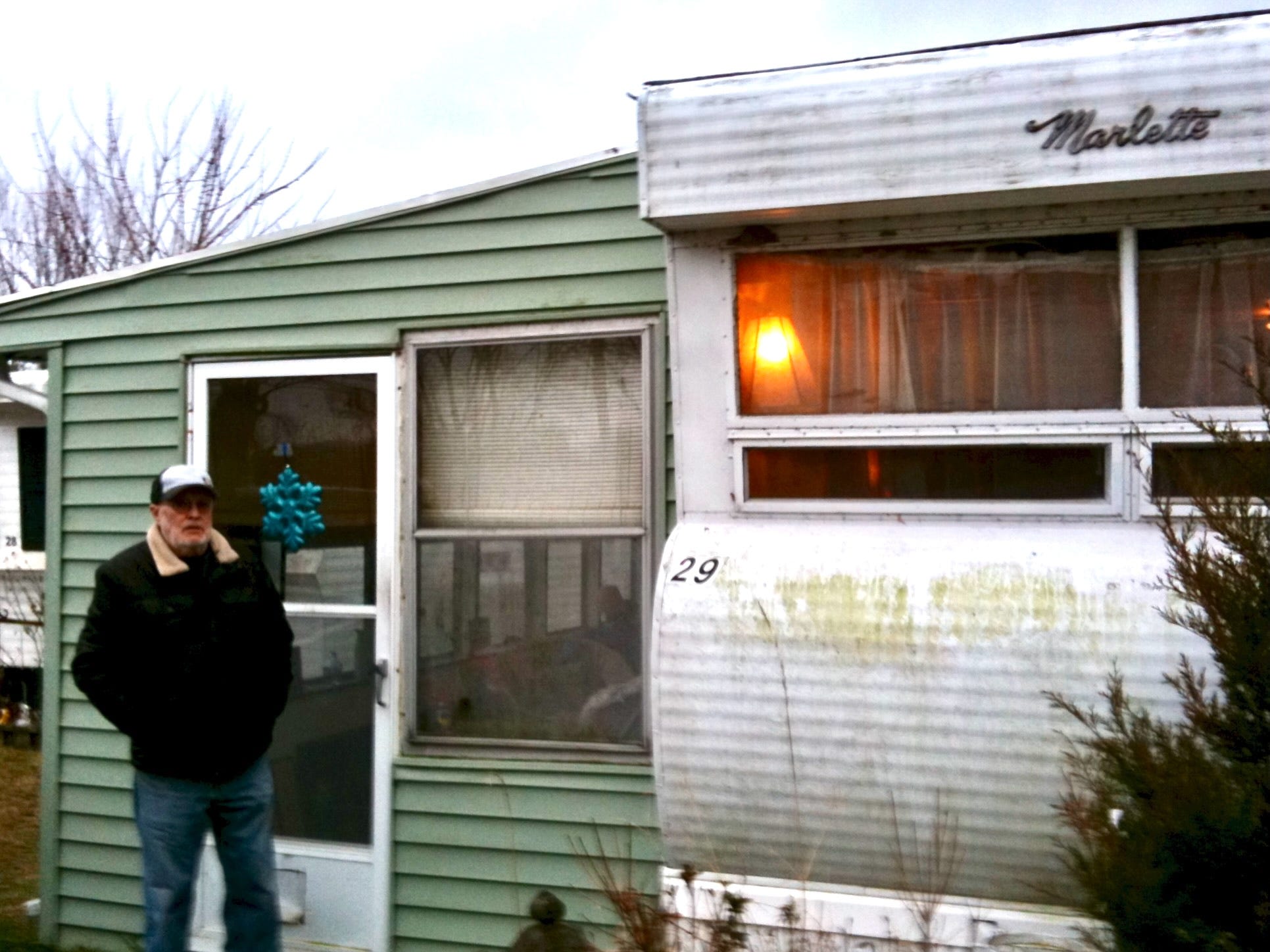
Bob outside his 1956 Marlette| Photo: Susan Schaefer
It has been my true home; I have never lived anywhere longer. Sometimes I stand in my bedroom at night and look through the length of my trailer, softly beautiful to me in the lamp glow. I tell people every day has been like a vacation.
My trailer is number 29 of the 35 that line the oval road in Cedar Springs, the name of the park, a grassy infield in the middle. Mexican families are at either end, hard-working people with beautiful raven-haired little kids. Everyone waves to everyone here. The sense of community pervades, private yet shared. Thankfully, there have been no ICE invasions.
I moved here shortly after 9/11. My job as senior editor at a trade magazine for the supermarket industry had been eliminated, so I sold my house in Narberth, PA, that sweet town of rosebushes and mortgages, and began this last stage of my life. It has been rewarding. I have become a part of the larger community here, yet both in and out of the game, as Thoreau put it. I made two documentaries about the Wildwood Boardwalk, one shown on the PBS station in Philadelphia, and published a book of short stories set in Wildwood that first appeared in the Wildwood Sun magazine. I have contributed yet maintained my natural distance from the hurly-burly of everyday life. It has been a good fit.
My ex-wife Suze once said that I live one click from camping out. Fine by me. A bonus here is my enclosed porch with 14 windows. I’m no Thomas Merton, but I’m reminded of his cinder block cell, separate from the Gethsemani monastery in Kentucky. In his journals, Merton constantly comments on the vivid weather changes and the natural environment about him. I start each day with coffee on my light and airy porch, no matter what the season. I see the seasons come and go up close. Deep woods and the wetlands abound much of the park. A coyote once padded past my porch and a gray fox quick-trotted across the infield one morning. I have taken to writing haiku verse about what I see, some of them actually decent. Still, I’m no Merton.
My sense of home extends to the paths of my inveterate walks each day. The seawall in North Wildwood provides one of the most breath-taking waterscapes I’ve ever seen. My walk there ends in the English garden at the Hereford Lighthouse. I linger there in what I call the Chapel of the Quiet Benches, in season a flowery refuge overhung by pine branches, a large bird bath in the center ringed by concentric circles of riotous blooms. Four benches are spaced on the perimeter. It is a grotto of peace and reflection for me.
Less peaceful, of course, is the Boardwalk, where I stroll sometimes, too. Over the years, I’ve become friends with many of the Boardwalk merchants. To me, they are day-to-day celebrities, pulling a year-long living from the few short months of “the season.” I feel privileged to have earned their recognition and friendship and greet them by name as I walk. In deep winter, the Boardwalk is like a boarded-up movie set, cheerfully desolate.
It hasn’t been all sunshine and moonbeams at my trailer. One winter’s eve, late, I was quietly reading while Ingrid snoozed on the couch. Suddenly, without warning, the entire side of the trailer where we were sitting exploded in on us with a deafening crash. There had been a heavy snowfall and now a long rain had soaked the porch roof next door to the point where the posts collapsed, spilling the roof onto my trailer. Luckily, the heater was undamaged, and we were able to have a troubled sleep amidst the carnage.
My friend Mike Mackey from when I hung out at the Wildwood Boxing Club has a construction company and he repaired my damaged trailer and as a result I now have cathedral windows in my living room. Mike later added a new bathroom among the changes and repairs I’ve made over the years and I’m now maybe two clicks from camping out.
My feeling of home has been enhanced by the fact that two of my three sisters live or lived within minutes of me. My sister Ellen, who died two years ago, was the first of our family to live at the shore. I was next, and then my sister Jean. Our grandfather’s heirs to the pull of the sea, we formed our own family community within the larger communities about us. These have been good years – good years at home.
 | A guest post by
|